The global eCommerce market continues to grow rapidly, but the accompanying issues of returns and inventory waste are becoming increasingly serious. According to data from EightX, the global eCommerce return rate averages between 19% and 21%, far higher than the 5% to 9% rate of traditional brick-and-mortar retail. Massive returns not only increase logistics and warehousing costs, but many products are also discounted or even discarded due to the high cost of restocking. In response to ESG and sustainability trends, coupled with the new generation of consumers placing greater emphasis on brands’ environmental responsibility, more and more brands are rethinking the traditional “stock first, sell later” model. The “Pre-Sale Model” is gradually emerging as a new direction for eCommerce to reduce waste, enhance operational efficiency, and respond to the demand for sustainable retail. In this edition of the e+Solutions eCommerce Logistics Guide, we will break down the operating logic, common types, benefits, and key implementation considerations of the pre-sale model, helping eCommerce businesses reduce inventory waste while enhancing operational efficiency and brand competitiveness.
What is Pre-Sale Model?
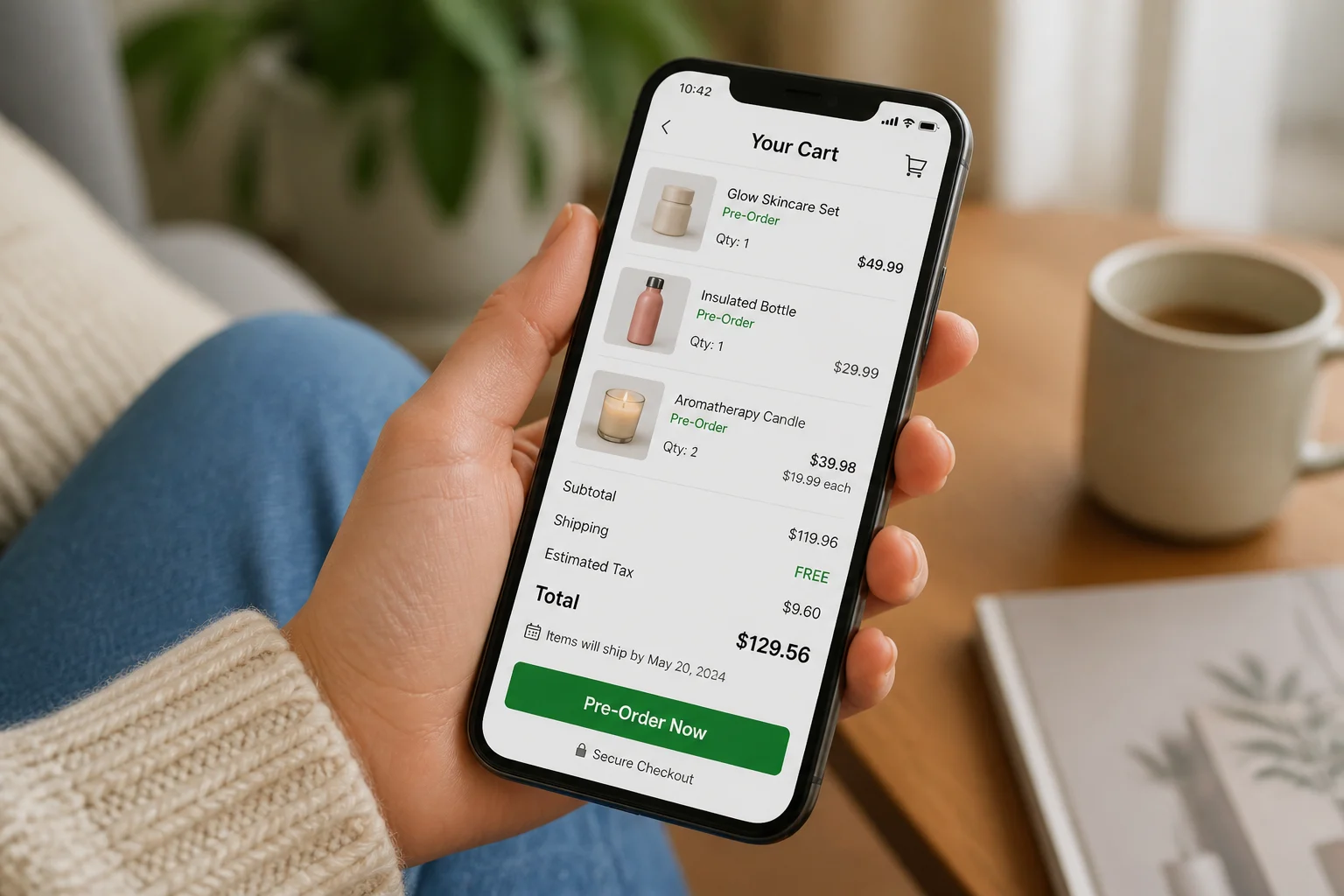
The traditional retail model relies on “forecasting market demand,” with businesses often required to produce and stock up months in advance. However, if market response falls short of expectations, large amounts of unsold inventory can result, leading to tied-up capital and wasted resources. The pre-sale model takes a fundamentally different approach: secure orders first, then arrange production or shipment. Through demand-driven supply, businesses can more accurately control inventory levels, reduce resource waste, and lower operational risk.
Common pre-sale models in the market today include:
- Crowdfunding Pre-Sale: Merchants set a minimum order target, and production only begins once the order quantity is reached. This model is commonly used for new product development, innovative design products, and independent brands, helping reduce the risk of product development.
- Limited-Time Pre-Order: Merchants open orders within a specified period, such as one week or one month, and arrange production and delivery collectively after collecting all orders. This model is commonly used for fashion brands, anime IP collaboration products, festive gift sets, and limited-edition collectibles.
- Subscription Pre-Sale: Consumers regularly pre-order products, and merchants arrange supply and delivery based on subscription quantities. This model is common in the coffee beans, health food, fresh products, and beauty care markets.
6 Key Values for Brands
Pre-sale is more than just a sales strategy. It also balances operational efficiency with sustainable development. Below are its six key values:
| Key Values | Results |
| Reduce Inventory Build-Up and Waste |
|
| Lower Return Rates |
|
| Improve Cash Flow |
|
| Reduce Logistics and Packaging Waste |
|
| Enhance Brand Image and Customer Loyalty |
|
| Accurately Capture Market Demand |
|
How Can Online Stores Launch a Pre-Sale Model?
For online stores looking to adopt a sustainable retail strategy, the pre-sale model is not exclusive to large brands. Even small and medium-sized eCommerce businesses can gradually introduce relevant mechanisms.
- Select Suitable Pre-Sale Products
- Not all products are suitable for pre-sale.
- Generally speaking, limited-edition products, seasonal items, customised products, new product trials, and high-ticket items are better suited for the pre-sale model.
- Conversely, ready-to-eat foods, daily consumables, or emergency supplies that require immediate shipment are not ideal for this model.
- Set Clear Pre-Sale Terms
- Merchants should clearly state the expected shipping date, payment arrangements, return and exchange policies, and delivery details to avoid affecting customer experience due to lack of transparency.
- Transparent and honest communication is key to building customer trust and helps reduce subsequent customer service disputes.
- Use Data to Forecast Demand
- By analysing historical sales data, member purchasing habits, and market trends, merchants can more accurately estimate pre-sale demand, avoid taking on too many orders that cannot be delivered on time, further enhance supply chain efficiency, and protect brand reputation.
- Pair with Sustainable Packaging and Logistics Solutions
- The value of the pre-sale model lies not only in reducing inventory waste, but should extend to the entire logistics and delivery process.
- Choosing eco-friendly packaging materials (such as FSC-certified cartons and biodegradable fillers), consolidating delivery routes, and improving warehousing efficiency all help further reduce the environmental impact of operations, allowing sustainability principles to run through the entire supply chain.
Challenges and Solutions
While the pre-sale model offers numerous advantages, businesses also face certain challenges during implementation.
| Challenges | Solutions |
|
1. Customers face longer waiting times: Since products are not shipped immediately, some consumers may lose purchase interest due to the wait. |
|
| 2. Cash flow and production planning require greater caution:
While pre-sales help improve cash flow, underestimating costs or production delays can still impact business operations. |
|
| 3. Logistics arrangements are more complex:
Pre-sale orders often involve staggered arrivals, consolidated shipments, or deliveries at different times. |
|

ePlus One-Stop eCommerce Pre-Sale Logistics Support
For the pre-sale model to be successfully implemented, the key lies not just in receiving orders, but in whether back-end logistics can effectively keep up. As pre-sale orders accumulate to a certain scale, order management, inventory synchronisation, picking efficiency, and delivery arrangements all directly impact shipping efficiency and customer experience.
ePlus provides a one-stop smart logistics solution that aligns with the operational needs of the pre-sale model. The ePlus’ smart logistics system tracks orders and inventory status in real time, helping merchants accurately monitor pre-sale product progress; combined with AMR (Autonomous Mobile Robot) technology, picking efficiency and accuracy are further enhanced. Additionally, ePlus supports multi-channel local and cross-border delivery, allowing merchants to flexibly arrange shipping strategies. With FSC-certified cartons used for packaging, ePlus helps brands enhance operational efficiency while achieving sustainability and ESG goals.
FAQ about eCommerce Pre-Order Model & Sustainable Retail
Read More:
eCommerce Strategy: Giveaway Marketing Done Right, Orders Take Flight
eCommerce Strategy: Capture the World Cup Football Opportunity
eCommerce Strategy: 5 Retention Marketing Strategies to Keep Customers Repurchasing
Encountering any e-Commerce logistics troubles? e+Solutions can help you! From goods storage and management, handling and packaging, to arranging last-mile, we can meet all your logistics needs while allowing you to operate an online store easily
Media Coverage:
- Break Bulk News – U-Freight’s e+Solutions centre imparts practical wisdom to logistics students
- Asia Cargo News – U-Freight Group Eyes further e-commerce logistics growth in 2024
- AJOT – U-Freight expands robot fleet in its Hong Kong e-commerce fulfilment center
- AJOT – U-Freight gains recognition for e-commerce logistics product
- Air Cargo News – U-Freight takes e+Solutions to Malaysia