In today’s competitive eCommerce landscape, effective inventory management is critical for operational efficiency, cost reduction and customer satisfaction. For online retailers, this skill is not only fundamental but also decisive in obtaining sustainable business growth. Regardless of the size of your online store, a robust inventory management system delivers substantial benefits. In this edition of e+Solutions eCommerce Logistics Guide, we’ll explore essential inventory strategies and applications that will help optimize your eCommerce logistics and maintain market competitiveness.
What is Inventory Management?
Inventory management refers to the systematic planning and control of various processes including warehousing, storage, stocktaking and shipping of goods, ensuring smooth supply chain operations, improving capital utilization efficiency, and reducing operational risks.
Challenges vary by business size. Small stores frequently face stockouts or excess inventory due to inadequate forecasting tools and expertise, hurting sales and brand perception. Medium to large enterprises need to balance inventory levels across multiple product lines, ensuring popular items remain in stock while avoiding excessive capital tie-up. At the same time, they also have to handle large SKU volumes and complex warehousing processes. If systems are inadequate, this can easily lead to inaccurate data, demand forecast deviations, and even issues like “system shows stock but actually out of stock,” directly impacting customer experience and business reputation.
The Importance of Inventory Management
Good inventory management can bring multiple benefits to online stores, including:
• Reducing excess inventory and stockout risks: According to the data from RepricerExpress, over 70% of online shoppers will choose to purchase from other platforms when facing stockouts, rather than waiting for products to be restocked. Precise inventory control can avoid capital tied up in accumulated goods or lost sales opportunities due to stockouts.
• Lowering operational costs and capital occupation: Avoiding unnecessary procurement and warehousing expenses, improving capital turnover rate.
• Optimizing warehouse space utilization: Rational planning of warehouse layout and product classification, improving operational efficiency and space utilization.
• Enhancing customer satisfaction and loyalty: Fast and accurate shipping strengthens customer experience, helping to promote repurchases and positive word-of-mouth.
• Optimizing operational strategies: A comprehensive inventory system can provide accurate data, helping businesses make sensible strategic decisions.

Three Major Inventory Management Strategies
Choosing the right inventory shipping strategy is crucial for businesses. Developing optimal processes based on product characteristics and business models can improve overall operational and supply chain management efficiency. Below are three common inventory management strategies:
1. First-In-First-Out (FIFO)
| Item | Details |
| Definition | Products that enter the warehouse first are shipped out first, ensuring goods don’t deteriorate due to prolonged storage. In practical operations, warehouse layouts need to be designed so that newly warehoused goods are placed behind older stock, or systems strictly control the shipping sequence. |
| Suitable Product Types | Products that easily deteriorate or become outdated, such as fashion items, food, cosmetics, seasonal products, etc. |
| Advantages |
|
| Disadvantages |
|
2. First-Expired-First-Out (FEFO)
| Item | Details |
| Definition | Products with the earliest expiration dates are shipped first, even if they weren’t the earliest to enter the warehouse, with shipping order determined by expiration date. Implementing FEFO requires establishing an accurate batch expiry management system that records detailed expiration information for each batch of incoming goods. |
| Suitable Product Types | High-value products or those with strict shelf-life requirements, such as pharmaceuticals, skincare products, nutritional supplements, food, etc. |
| Advantages |
|
| Disadvantages |
|
3. Last-In-First-Out (LIFO)
| Item | Details |
| Definition | The most recently warehoused goods are shipped first, typically applied in specific industries or special scenarios. Common in stacked storage or single-entry single-exit warehouse environments. |
| Suitable Product Types | Products with stable value where long-term storage doesn’t affect quality, such as metal materials, industrial parts, etc. |
| Advantages |
|
| Disadvantages |
|
ePlus Inventory Management Support
Addressing the practical needs of online stores in logistics and inventory, ePlus provides professional one-stop eCommerce logistics services, including warehousing, product sorting, order packaging and delivery, comprehensively supporting logistics needs for businesses of all sizes.
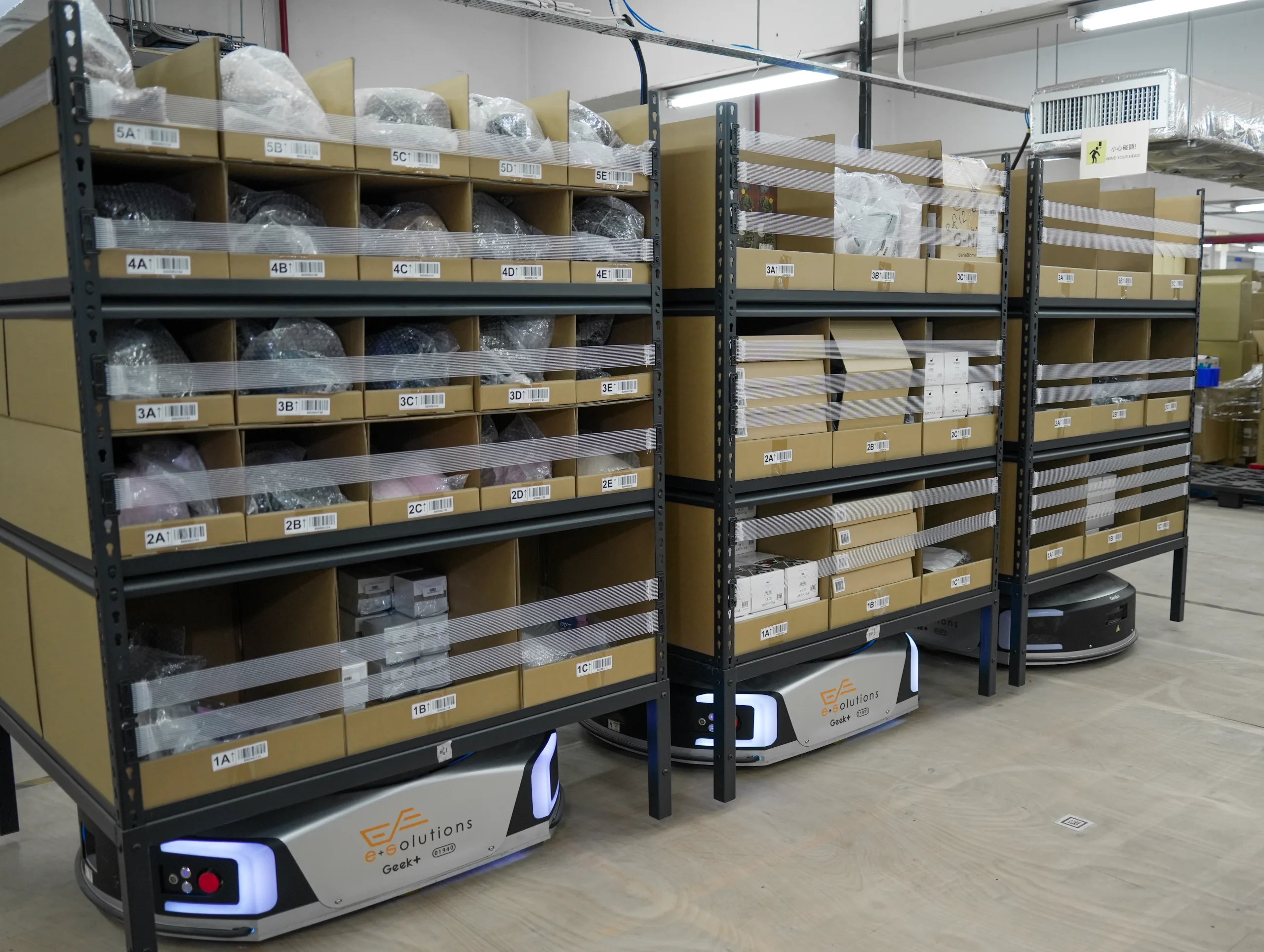
ePlus warehouses incorporate Autonomous Mobile Robots (AMR) paired with self-developed Warehouse Management System (WMS), achieving intelligent logistics and warehouse management. The system interfaces in real-time with eCommerce and courier platforms. After customers place orders on eCommerce platforms, the system automatically receives the information and transmits it to the AMR. The robots independently pick orders 24 hours without interruption, significantly improving order processing efficiency. Additionally, the system synchronizes inventory data updates in real-time, ensuring information accuracy and consistency. Merchants can access order status and inventory information through the cloud backend at any time, and use the given charts to analyze sales trends and operational data, achieving fully transparent management and flexible adjustment of sales strategies and inventory allocation.
Inventory management is not just a single operational process but a comprehensive set of capabilities encompassing strategy, systems and execution. Mastering the right management principles, combined with professional tool support, can effectively reduce operational risks, optimize shipping efficiency, and create more efficient and sustainable growth momentum for online stores.
With innovative thinking, smart logistics innovative technology and flexible service solutions, ePlus helps businesses efficiently develop local and international eCommerce markets. Looking ahead, we will continue investing in automation technology and green logistics, actively promoting industry digital transformation and further enriching eCommerce logistics services to help merchants optimize operational efficiency, seize new market opportunities, and collectively create a better eCommerce future.
Read More:
eCommerce Logistics: Complete Guide to ePlus Logistics Services
eCommerce Logistics: The Key to Scaling Your eCommerce Business Successfully
eCommerce Logistics: Two Key Trends Shaping the Future of Logistics
Encountering any e-Commerce logistics troubles? e+Solutions can help you! From goods storage and management, handling and packaging, to arranging last-mile, we can meet all your logistics needs while allowing you to operate an online store easily
Media Coverage:
- Break Bulk News – U-Freight’s e+Solutions centre imparts practical wisdom to logistics students
- Asia Cargo News – U-Freight Group Eyes further e-commerce logistics growth in 2024
- AJOT – U-Freight expands robot fleet in its Hong Kong e-commerce fulfilment center
- AJOT – U-Freight gains recognition for e-commerce logistics product
- Air Cargo News – U-Freight takes e+Solutions to Malaysia