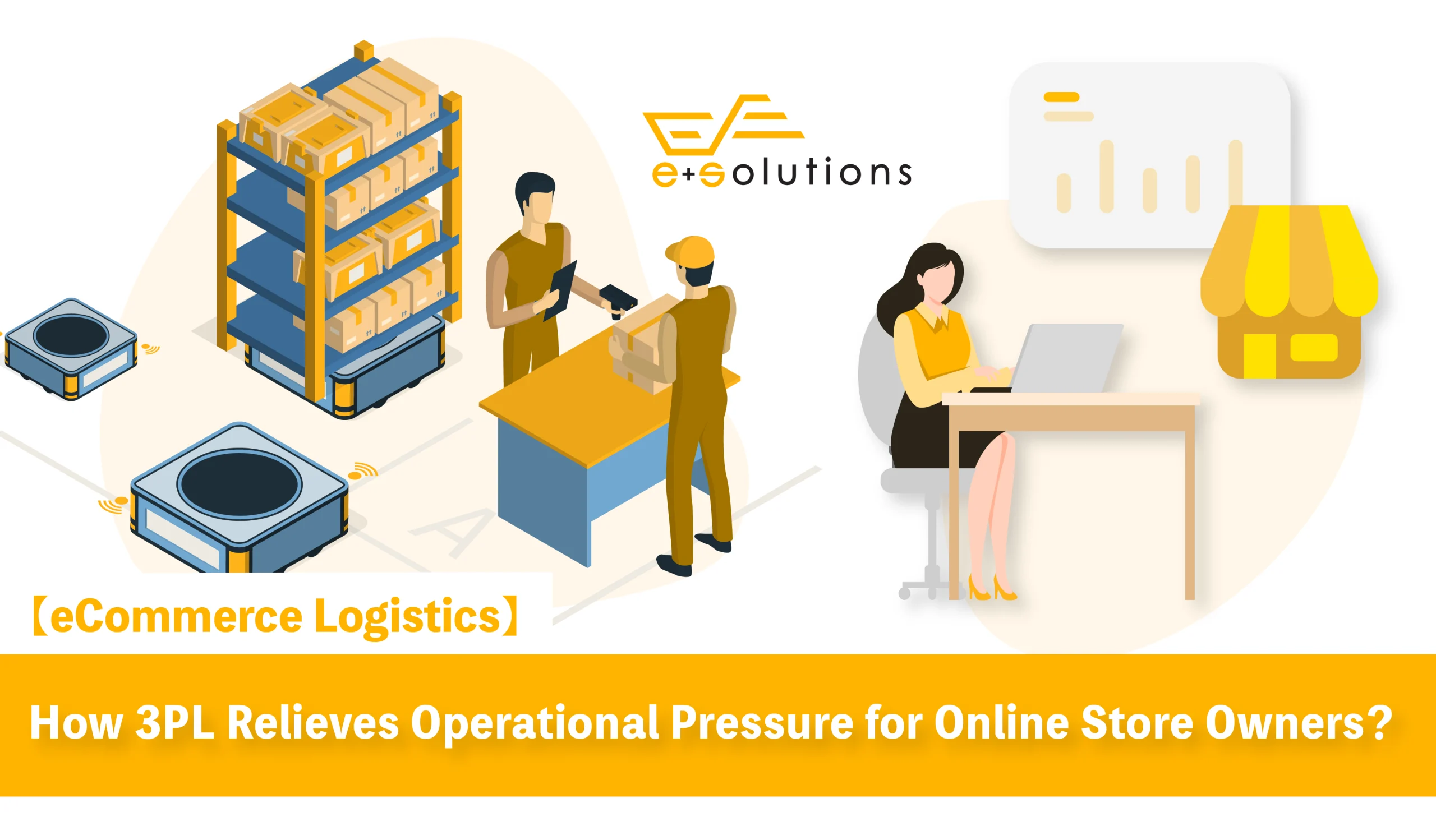
In today’s rapidly evolving business landscape, automation has emerged as a critical driver of efficiency and competitiveness across various industries. According to the data from Precedence Research, the global Robotic Process Automation (RPA) market was valued at USD 18.41 billion in 2023. The market is projected to reach USD 178.55 billion by 2033, with an anticipated CAGR of 25.7%. At the forefront of this revolution are two transformative technologies: Automated Guided Vehicle (AGV) and Autonomous Mobile Robot (AMR). In this edition of e+Solutions eCommerce Logistics Classroom, we will explore these cutting-edge solutions, their distinct features, applications, and how to select the right option for business needs.
What is AGV (Automated Guided Vehicle)?
Automated Guided Vehicle (AGV) is a self-propelled robot that navigates via pre-installed infrastructure, including embedded floor magnets, optical markers, or inductive wires. Predominantly deployed in industrial environments such as warehouses and manufacturing facilities, AGV executes material transport and inventory management tasks along predefined routes. The system features collision avoidance capabilities, halting operations when obstacles are detected. AGV significantly enhances operational efficiency by minimizing human error in repetitive tasks. However, their reliance on fixed pathways limits adaptability in dynamic or complex environments.
There are several common types of AGVs:
- Automated Guide Cart: Transport lighter materials or goods
- Tugger AGV: Pull multiple trailers or carts
- Forklift AGV: Lift and transport pallets

What is AMR (Autonomous Mobile Robot)?
Autonomous Mobile Robot (AMR) represents the next evolution in robotic automation. Unlike AGV, AMR utilizes advanced sensors, cameras and machine learning algorithms to navigate dynamically through the environment, adapting to changes and obstacles in real time and planning optimal navigation paths. This advanced technology allows AMR to operate with greater flexibility and adaptability.
Common types of AMR include:
- Picking robots: Streamline the picking process in order fulfillment by bringing products to the worker or picking products from shelves or totes
- Transport robots: Automate the transfer of items between locations, like boxes, pallets and containers
- Sorting robots: Pick up and transport items autonomously to the correct sorting destination, like orders, packages and returns
Differences between AGV and AMR
AGV and AMR, while both serving automation purposes, exhibit significant differences in their operational characteristics and capabilities. The following table elucidates these differences, offering insight into the unique features and advantages of each technology:
| AGV (Automated Guided Vehicle) | AMR (Autonomous Mobile Robot) | |
| Navigation | Follows fixed paths with wires, magnetic tape and beacons etc | Uses dynamic navigation via internal map and sensors, like SLAM and LiDAR |
| Intelligence | Lower, pre-programmed and cannot learn from past data with no decision-making capabilities | Higher, collects and learns relevant data to optimize operations via machine learning |
| Reconfiguration Complexity | Higher, necessitates reinstallation of specialized navigation infrastructure (e.g. magnetic tape pathways) | Lower, route modifications can be implemented without physical pathway reconfiguration |
| Flexibility | Lower, fixed routes with limited ability to respond to environmental variations | Higher, capable of real-time path planning and obstacle avoidance |
| Cost | Lower initial cost, but higher infrastructure and maintenance costs | Higher initial cost, but lower infrastructure and maintenance costs |
| Safety | Stops upon encountering obstacles | Reroutes paths with advanced obstacle avoidance |
| Applications | Repetitive tasks with fixed routes | Complex tasks in dynamic environments that require material handling, picking or sorting |

Common Applications in the Market
AGV and AMR have revolutionized operations across diverse industries, enhancing efficiency and productivity. The following overview highlights how the automated solutions are transforming key industries:
| Industry | Applications |
| Manufacturing | – Material and component transport between workstations
– Waste and scrap removal |
| Healthcare | – Medication and supply delivery to patient rooms
– Meal delivery to patients |
| Automotive | – Parts delivery to assembly stations
– Tire and heavy component transport |
| Retail | – Inventory replenishment
– In-store customer assistance and information – Order fulfillment in distribution centers |
| Hospitality | – Room service delivery in hotels
– Luggage transport |
| eCommerce Logistics | – Goods-to-person order picking
– Automated sorting |
How to Choose the Right Solution?
When deciding between AGV and AMR, businesses should consider their specific operational requirements and environment. If travel paths remain consistent, material flows are constant, and there are few obstacles in the environment, AGV is often the preferable choice. It offers a lower-cost solution and performs tasks with precision and reliability in stable conditions. However, in situations where paths and transport tasks frequently vary, or the operational environment is more dynamic, AMR is generally the better option. Its flexibility and adaptability make it ideal for handling diverse tasks and navigating changing layouts.
In the decision-making process, businesses must weigh several critical factors: current needs versus future plans, investment costs against long-term operational expenses, system compatibility, workforce training requirements, as well as safety standards and regulatory compliance. This comprehensive assessment guides them in selecting the most appropriate automation solution for their specific circumstances and strategic goals.
Businesses seeking to enhance logistics efficiency can also leverage the expertise of reliable 3PL logistics partners. ePlus, for instance, offers comprehensive eCommerce fulfillment services, including storage, pick and pack, and delivery. Our state-of-the-art eCommerce warehouse, equipped with advanced AMR technology, efficiently processes high volumes of orders with exceptional accuracy. By partnering with ePlus, businesses can access the benefits of AMR technology without the need for significant capital investment, allowing them to focus on core competencies while ensuring optimal logistics performance.
FAQ about Autonomous Mobile Robots (AMRs)
Read More:
International Shipping Must-Read: Lithium Batteries, Liquids, Cosmetics
Daigou eCommerce Guide 2024: 3 Tips to Streamline Order Fulfillment
【eCommerce Logistics】5 Warm Reminders for Warehousing, Packaging, and Shipping
Encountering any e-Commerce logistics troubles? e+Solutions can help you! From goods storage and management, handling and packaging, to arranging last-mile, we can meet all your logistics needs while allowing you to operate an online store easily
Media Coverage:
- Break Bulk News – U-Freight’s e+Solutions centre imparts practical wisdom to logistics students
- Asia Cargo News – U-Freight Group Eyes further e-commerce logistics growth in 2024
- AJOT – U-Freight expands robot fleet in its Hong Kong e-commerce fulfilment center
- AJOT – U-Freight gains recognition for e-commerce logistics product
- Air Cargo News – U-Freight takes e+Solutions to Malaysia