


Table of Content
Is the US$800 De Minimis Rule Really Over? What Sellers Must Know Now?
How Will the New Tariff Rules Hit Cross-Border Businesses?
Direct Mail or U.S. Warehouses? Which Strategy Saves You More in 2026?
Amazon AWD Changed Its Policy – Are Your Large Products Still Eligible for Inbound?
Why Are U.S. 3PL Warehouses the Smarter Alternative Now?
ePlus One-Stop Cross-Border eCommerce Logistics Solutions
FAQ about U.S. Tariffs Policy & Cross-Border eCommerce
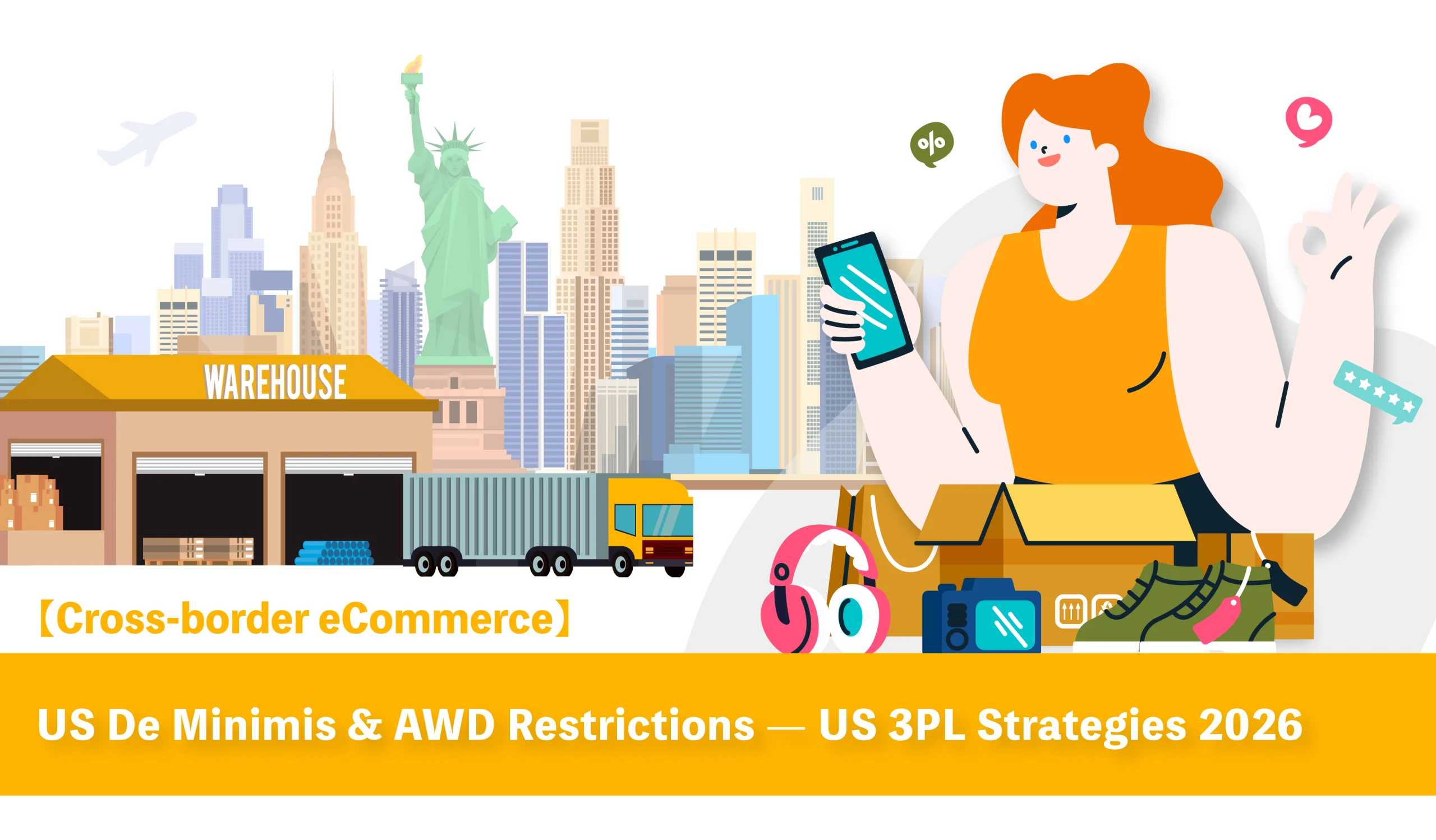
The U.S. market has always been a cornerstone for cross-border eCommerce sellers, but the local eCommerce logistics landscape is undergoing a major transformation. Beginning in 2025, the U.S. government gradually tightened and has now indefinitely suspended the US$800 De Minimis duty-free policy, officially ending the era of tax-free direct mail for small overseas parcels. All imported goods are now subject to U.S. tariffs. Concurrently, Amazon AWD (Amazon Warehousing & Distribution) implemented strict size and weight restrictions starting July 31, 2026, no longer accepting large and non-sortable SKUs (Stock Keeping Units).
In this edition of the e+Solutions eCommerce Logistics Guide, we’ll analyze these policy shifts and explore how eCommerce businesses can leverage U.S. 3PL overseas warehouses to maintain stable growth.
Is the US$800 De Minimis Rule Really Over? What Sellers Must Know Now?
What is De Minimis?
- De Minimis is a U.S. administrative exemption that historically allowed goods valued at US$800 or less per recipient per day to enter duty-free. This policy long served as the operational foundation for cross-border eCommerce direct-mail duty-free small parcels.
Latest Regulatory Status
- August 29, 2025: A U.S. Presidential Executive Order officially suspended De Minimis duty-free treatment for all countries.
- June 24, 2026: U.S. Customs and Border Protection (CBP) formally incorporated this measure into federal regulations indefinitely, applying it to all import channels, including international postal networks.
Key Takeaways: All commercial goods entering the United States must now be declared and subject to applicable duties; private gifts (≤ US$100) and personal traveller effects remain exempt.
How Will the New Tariff Rules Hit Cross-Border Businesses?
- Rising Shipping Costs: Direct-mail parcels incur extra customs clearance fees and duties, squeezing profit margins.
- Customs Delays: U.S. air hubs process massive daily parcel volumes, making complex procedures prone to bottlenecks.
- Degraded Buyer Experience: Using DDU/DAP shipping models may result in customers being hit with unexpected fees upon delivery, triggering package rejections and negative reviews.

Direct Mail or U.S. Warehouses? Which Strategy Saves You More in 2026?
To protect profit margins, cross-border sellers are shifting from a reactive “ship-per-order” direct-mail model to a bulk-stocking model utilizing U.S. overseas warehouses.
| Feature | Traditional Direct Mail | U.S. 3PL Overseas Warehouse |
| Import Method | Thousands of individual B2C express parcels | Bulk B2B shipments via ocean freight or air freight |
| Customs Clearance | Individual declaration per package; high fees & complex paperwork | One-time clearance per container or pallet, lowering marginal cost |
| Landed Cost | High per-unit express air shipping rates | Bulk freight cost split across units, significantly reducing unit shipping cost |
| U.S. Delivery Time | 7–14 days for cross-border transit | 1–5 days via local U.S. domestic couriers |
| Supported Sales Channels | Restricted to individual B2C online store orders | Multi-channel support: eCommerce platforms, Amazon FBA, B2B replenishment, etc. |
Amazon AWD Changed Its Policy – Are Your Large Products Still Eligible for Inbound?
What is Amazon AWD, and how does it differ from FBA?
- Amazon FBA (Fulfillment by Amazon): Fulfillment center responsible for picking, packing, and direct-to-consumer delivery, featuring high storage fees and strict inventory limits.
- Amazon AWD (Amazon Warehousing & Distribution): Bulk storage buffer warehouse with lower fees that automatically replenishes FBA inventory when stock runs low.
AWD New Restrictions: Small Products Only
- Effective July 31, 2026, Amazon AWD only accepts products that meet all of the following criteria simultaneously:
- Length < 18 inches
- Width < 14 inches
- Height < 8 inches
- Weight < 20 lbs
- If any dimension exceeds these limits (e.g., home appliances, furniture, sports equipment, large household goods), creating an AWD inbound shipment order is no longer possible.
Seller Solution
- When bulk shipments are imported into the US, goods can be delivered to ePlus‘ US warehouse and replenished to FBA in batches based on actual sales velocity, helping sellers avoid costly Amazon long-term storage fees and inbound placement fees.
Why Are U.S. 3PL Warehouses the Smarter Alternative Now?
- Lower Landing Costs: Bulk ocean freight combined with local warehousing yields average per-item shipping costs far below cross-border direct mail.
- Faster Local Delivery: Pre-stocking goods in U.S. warehouses allows local delivery speeds that drastically outperform cross-border parcels, improving conversion rates.
- Flexible Multi-Channel Fulfillment: Simultaneously handle Shopify, Amazon, and eBay orders, FBA replenishment, B2B restocking, and local returns.
- Comprehensive Value-Added Services: Pick-and-pack, custom packaging, kitting, relabeling, and pre-shipment quality inspections.
ePlus One-Stop Cross-Border eCommerce Logistics Solutions
Navigating the post-de-minimis environment requires a logistics partner capable of seamlessly connecting international freight with local warehouse distribution.
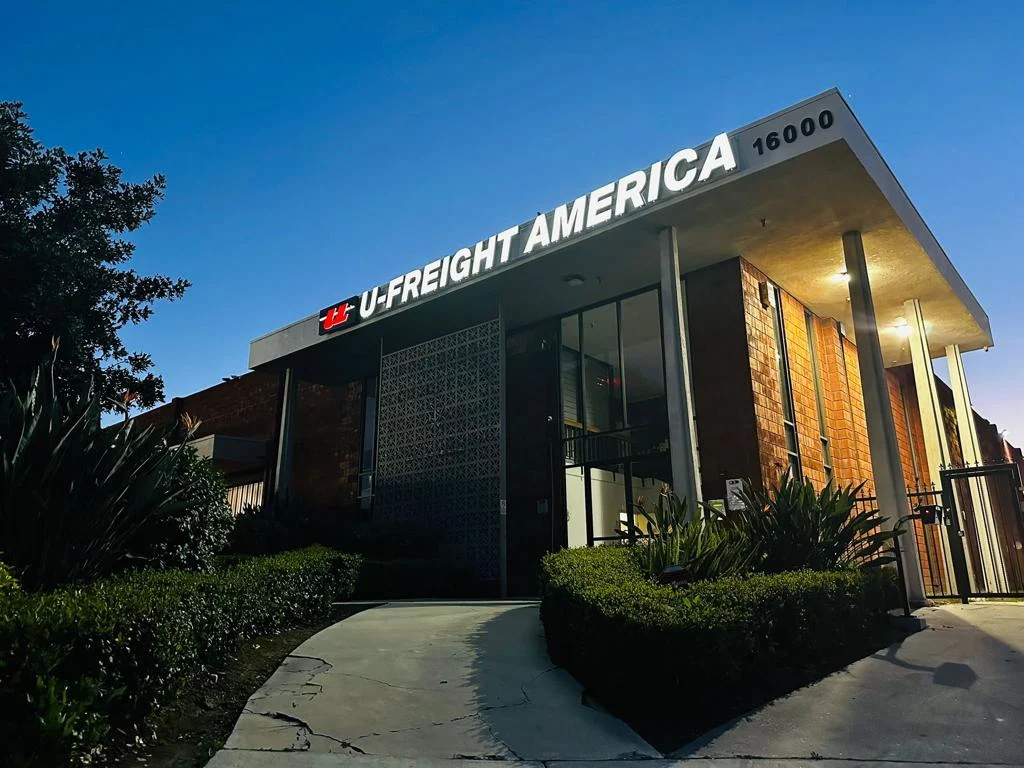
Backed by parent company UFL Group’s 58 years of international freight forwarding experience, ePlus offers online merchants an end-to-end logistics support:
- Integrated Bulk Freight & Clearance: Comprehensive air/ocean import forwarding and customs brokerage services.
- U.S. Overseas Warehouse Network: Strategically positioned fulfillment centers in major U.S. hubs, including Los Angeles (West Coast) and Chicago (Midwest), to maximize local delivery efficiency.
- Smart Logistics System: Real-time inventory level tracking, automated order processing, and expiry date alerts.
- End-to-End Fulfillment Services: Professional pick-and-pack, local courier dispatch coordination, re-labeling, and hassle-free domestic returns management.
Whether you are adapting to U.S. tariff policy shifts or expanding your American footprint, ePlus empowers your brand to transition smoothly from parcel mail to a resilient, inventory-led U.S. market strategy.
FAQ about U.S. Tariffs Policy & Cross-Border eCommerce
Read More:
Cross-Border eCommerce: EU Customs Reform 2026 — End of De Minimis & Seller Strategies
Cross-Border eCommerce: Solving the 4 Major Logistics Pain Points of TikTok Live Commerce
Cross-Border eCommerce: How to Build a Risk-Resistant Supply Chain Under Geopolitical Conflicts?
Encountering any e-Commerce logistics troubles? e+Solutions can help you! From goods storage and management, handling and packaging, to arranging last-mile, we can meet all your logistics needs while allowing you to operate an online store easily
Media Coverage:
- Break Bulk News – U-Freight’s e+Solutions centre imparts practical wisdom to logistics students
- Asia Cargo News – U-Freight Group Eyes further e-commerce logistics growth in 2024
- AJOT – U-Freight expands robot fleet in its Hong Kong e-commerce fulfilment center
- AJOT – U-Freight gains recognition for e-commerce logistics product
- Air Cargo News – U-Freight takes e+Solutions to Malaysia


